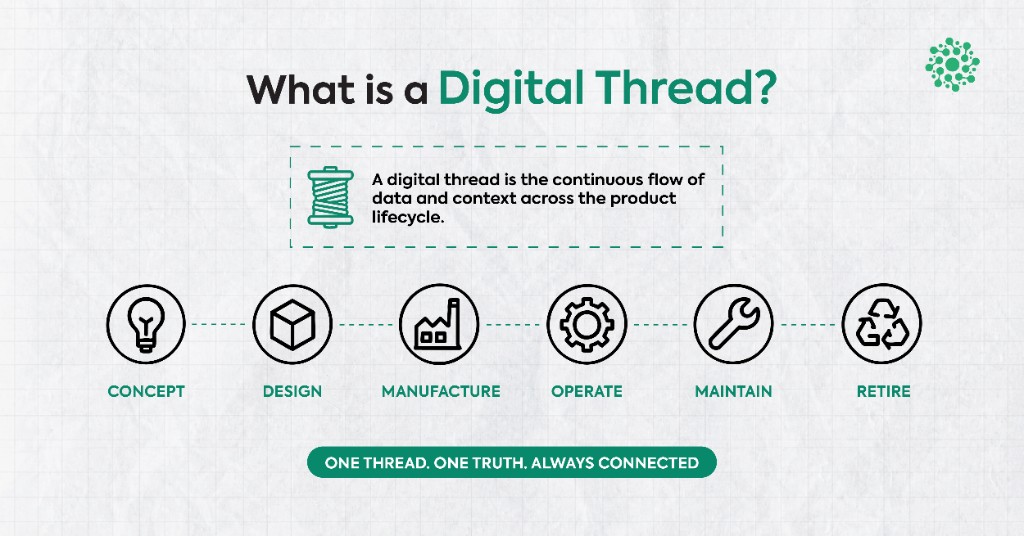
What Is a Digital Thread? Definition, Lifecycle, and Where It Breaks

Category:
Why Heavy CAD Slows Engineering Teams Down

Executive Summary
In the high-stakes world of modern engineering, "time to market" is the primary metric of success. However, a legacy bottleneck remains hidden within the hardware-intensive workflows of most engineering departments: the weight of 3D CAD data. As models grow in complexity, the traditional tools used to view and collaborate on them have failed to scale, resulting in a culture of "loading fatigue." This blog explores why heavy CAD models are slowing down engineering teams and how Xviewr's innovative browser-native architecture is transforming these liabilities into a strategic competitive advantage.
1. The Paradox: High-Speed Innovation, Low-Speed Infrastructure
We live in an era of generative design and rapid prototyping, yet the fundamental act of opening a design file remains a primary source of enterprise friction. Data highlights a significant "Pain" point regarding the sluggish nature of traditional CAD processes.
When a project manager or a senior engineer needs to verify a specific detail, they are often met with a loading bar that can last anywhere from several minutes to over half an hour. This technical debt creates a devastating ripple effect across the organization:
- The Cognitive Tax of Context Switching: When a model takes 10 minutes to load, the engineer is forced to pivot to secondary tasks like checking email. By the time the model is ready, their mental focus is fragmented, and the "deep work" required for complex problem-solving is lost.
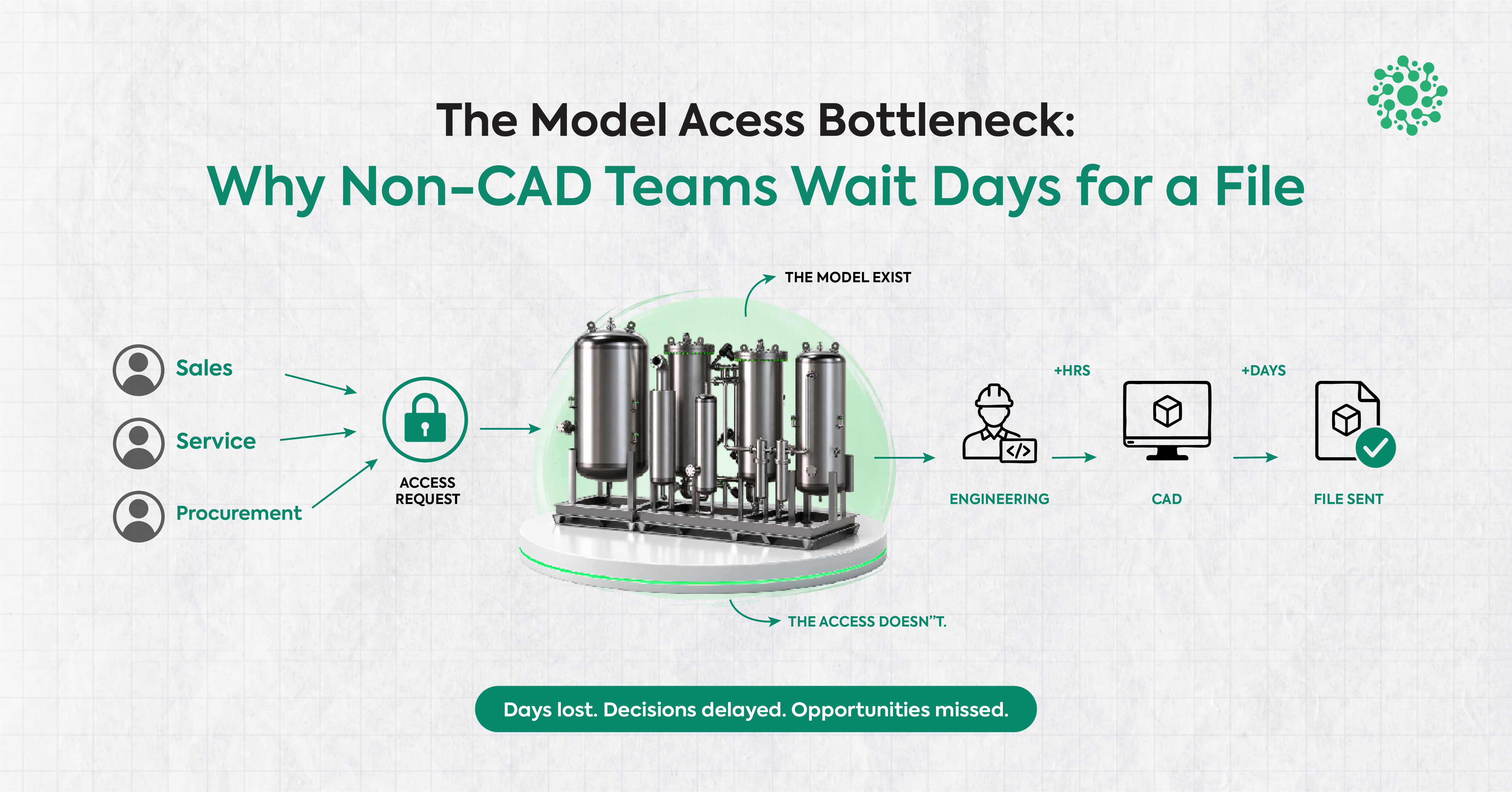
- The Software Gatekeeping Barrier: Historically, viewing a model required the full, expensive CAD suite to be installed on high-end, dedicated workstations. This excludes critical stakeholders such as those in procurement, quality, or sales—who need the data but do not require heavy authoring tools.
2. Deconstructing the "Heavy CAD" Bottleneck
"Heavy" is not just a measure of file size; it refers to the massive computational overhead required to render complex assemblies containing thousands of individual parts and nested sub-assemblies.
- The Hardware Brute-Force Trap: Many enterprises attempt to solve this latency by purchasing $5,000+ workstations for every team member. However, this is a non-scalable financial burden that doesn't address the core software inefficiency.
- The Versioning Nightmare: Because these models are so difficult to open and share, teams often rely on static "snapshots" or 2D exports. These are frequently outdated the moment they are generated, leading to misalignment and costly errors in downstream production.
3. How Xviewr Solves the Bottleneck (The Technology Shift)
Xviewr isn't just another viewer; it is a secure, browser-based 3D engine specifically engineered to decouple the "weight" of the CAD model from the user's local hardware.
The Xviewr Difference:
- Cloud-Side Rendering & Streaming: Unlike traditional viewers that force your local RAM to process the entire geometry, Xviewr uses optimized server-side processing. It sends only the visual data needed for your current view to the browser, allowing for Instant Loading of gigabyte-sized files on standard laptops.
- Zero-Installation Footprint: Because it runs entirely in the browser, Xviewr eliminates the need for complex IT installations, CAD licenses, or driver updates. Users simply drag and drop a file to start working immediately.
- Metadata-First Architecture: While a traditional CAD system might struggle to display part numbers without loading the whole model, Xviewr's metadata panel slides in instantly. This allows Project Managers to verify part attributes and spatial constraints without waiting for the full geometry to render.
4. The Human Cost: Engineers, PMs, and Productivity
Engineers and Project Managers are the roles most severely affected by this latency.
- Project Managers: PMs need to make swift, data-driven decisions. Xviewr empowers them to verify design milestones in real-time, removing the "Slow" cycles that stall project timelines.
- Engineers & CAE Professionals: For specialized roles like collaboration is where the most significant friction occurs. Xviewr streamlines this hand-off by allowing simulation experts and designers to interrogate the same 3D model simultaneously in a shared browser session.
5. Conclusion: Reclaiming the Engineering "Flow"
To remain competitive in 2026 and beyond, engineering firms must decouple "viewing and collaboration" from the heavy "authoring" software. By eliminating the pain of heavy CAD loading times, Xviewr allows teams to return to their core mission: engineering excellence.
When you remove the loading bar, you remove the ceiling of your team's potential. Xviewr isn't just saving time; it's reclaiming the hours of innovation that were previously lost to the "Slow" cycles of the past.
If you want to experience how fast you can load your massive 3D models- try Xviewr in action here- https://xviewr.optellix.com/login
.webp)
Never miss
Oops! Something went wrong while submitting the form.
Looking for Something Similar?
We have built everything from Creo plugins to AI-based VR walkthroughs. If your challenge feels like one of these — or somewhere in between — we would love to hear about it.
Feel free to share your details!
Oops! Something went wrong while submitting the form.