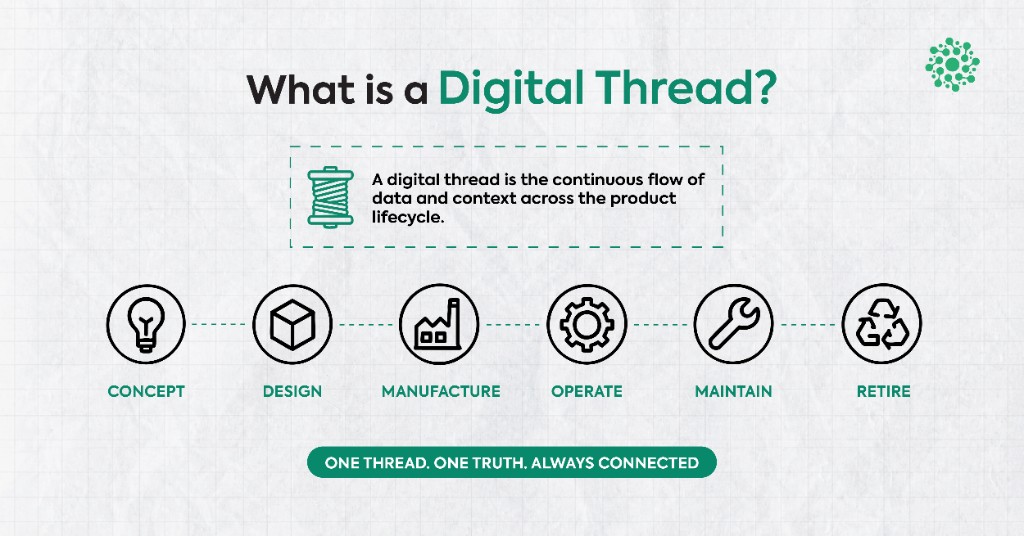
What Is a Digital Thread? Definition, Lifecycle, and Where It Breaks

Category:
Why Hardware Shouldn’t Limit Engineering Productivity: Breaking the Performance Barrier

Why Hardware Shouldn’t Limit Engineering Productivity: Breaking the Performance Barrier
In the modern industrial landscape, the pace of innovation is dictated by the speed of iteration. For engineering teams and design leads, the transition from a 3D concept to a shared, actionable vision is the most critical phase of product development. However, a significant and persistent bottleneck continues to hinder this process: the physical hardware sitting on the engineer’s desk.
For decades, high-fidelity 3D visualization was tethered to expensive, heavy workstations. But as models grow more complex and global collaboration becomes the norm, this hardware-centric model is failing. It’s time to acknowledge a fundamental truth: Hardware should not limit engineering productivity.
The "2D Trap": How Hardware Limits Force Costly Rework
One of the most damaging consequences of hardware limitations is that it forces teams to revert to 2D workflows (like static PDFs, screenshots, or paper drawings) because the average office laptop cannot handle a massive 3D model. This "2D Trap" is an invisible tax on your productivity.
- Loss of Context: A 2D screenshot can never convey the spatial complexity of a 3D assembly. When downstream teams (manufacturing, sales, or clients) try to interpret 3D problems through 2D images, details get lost in translation.
- The Rework Cycle: Because 2D is limited, errors often go unnoticed until a physical prototype is built or, worse, until the production phase. Fixing a design flaw in the 2D stage is cheap; fixing it after a part has been machined or a mold has been cast is incredibly expensive.
- Communication Friction: Explaining a complex geometric clash via a 2D email thread takes hours of back-and-forth. In a browser-based 3D environment, that same issue can be identified and solved in seconds by simply rotating the model.
The Shift Toward Lightweight Hardware
The solution isn't necessarily more powerful "heavy" hardware; it is the decoupling of the 3D interaction from the local machine. We are entering the era of the "Thin-Client Engineering Environment."
By leveraging advanced web-based visualization, teams can use lightweight hardware ultra-books, tablets, or even standard office laptops—to interrogate massive datasets. This shift is powered by streaming technologies that transmit the "pixels" of the visualization rather than requiring the local GPU to calculate every vertex and polygon.
Benefits of the Lightweight Approach:
- Instant Access: Open and interact with massive 3D models (STEP, STL, GLTF) in a browser in seconds.
- Device Independence: Move from a high-end workstation to a meeting room tablet without losing detail.
- MBD Ready: View Model-Based Definition (MBD) and PMI data directly, ensuring everyone has the "Single Source of Truth."
Redefining Downstream Collaboration
When hardware limits the UI performance, teams often make compromises. They might "simplify" a model or strip away metadata just so the local machine can rotate the view. Compromising the model to suit the hardware is a failure of the toolset.
With platforms like Xviewr, the goal is to provide a seamless experience where the complexity of the model does not dictate the performance of the user.
- Collaborative Reviews: Instead of static thumbnails, share a live link. Stakeholders can use exploded views, cross-sections, and measurements in real-time.
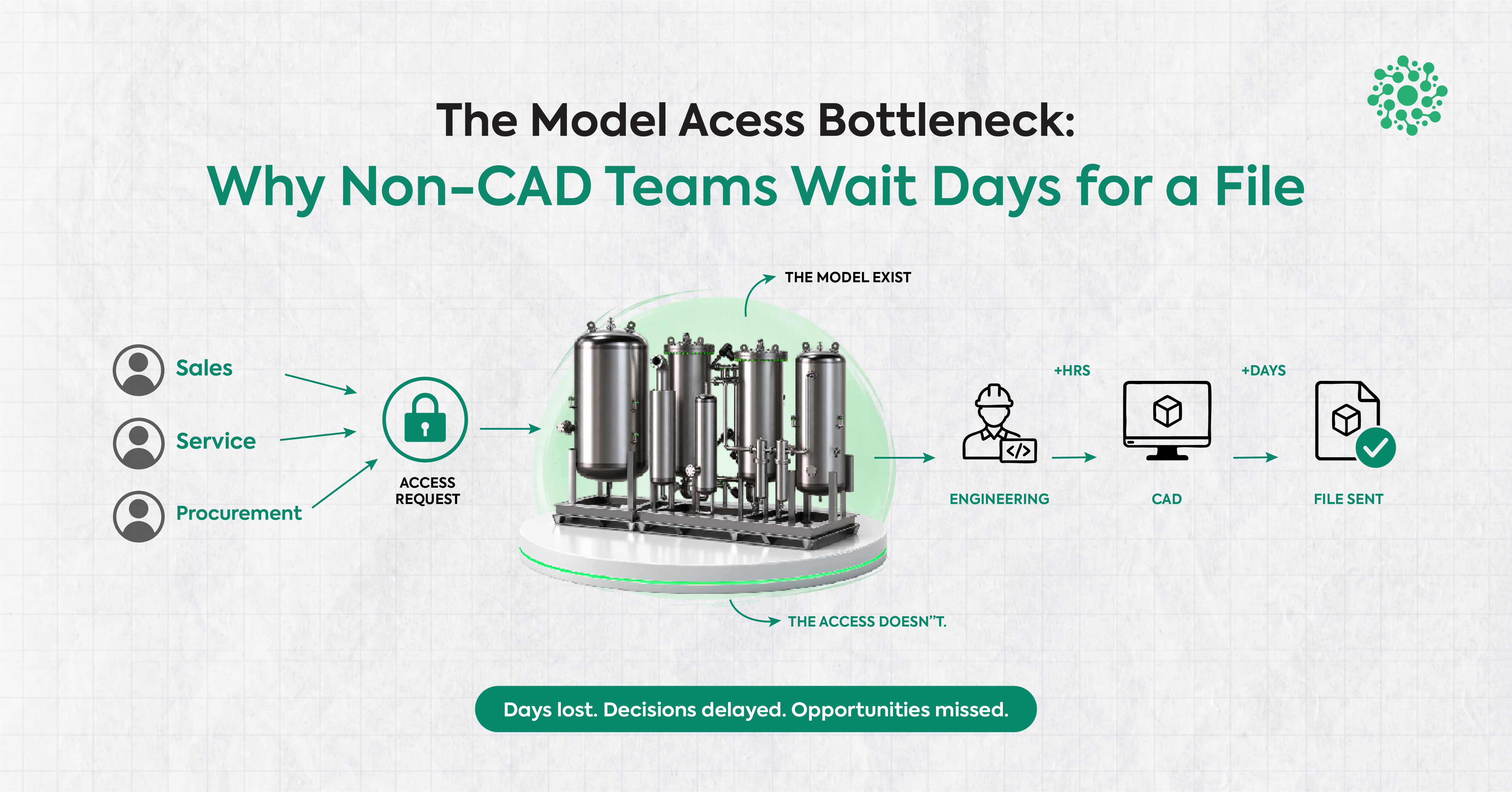
- Democratization of Data: Non-engineers can view high-fidelity engineering data without needing a specialized workstation or a license for expensive CAD software.
- Focus on Design, Not Infrastructure: Your team should be solving design problems, not troubleshooting graphics drivers or waiting for files to download and open.
The Economic Argument: ROI of Agnostic Workflows
Transitioning away from hardware dependency is a financial imperative.
- Reduction in CAPEX: Shift from buying $5,000 workstations to using scalable, browser-based platforms.
- Lower IT Overhead: Managing a web-based platform is significantly easier than maintaining individual software installations across a fleet of high-end machines.
- Eliminating Rework: By keeping everyone in a 3D environment, you catch errors early, drastically reducing the cost of mid-production changes.
Conclusion: The Future is Unbound
The future of engineering is collaborative, mobile, and web-native. The "Pain" of hardware limitations—the heat, the noise, the tethered desks, and the forced retreat into 2D—is a relic of the past.
As models become more detailed, the demand for accessibility will only increase. We meet that demand by embracing platforms that deliver high-performance 3D capabilities to any screen, anywhere.
Stop letting 2D limitations cause 3D problems.
Experience the future of hardware-agnostic 3D with Xviewr- Start Free Trial Today- https://xviewr.optellix.com/login
.webp)
Never miss
Oops! Something went wrong while submitting the form.
Looking for Something Similar?
We have built everything from Creo plugins to AI-based VR walkthroughs. If your challenge feels like one of these — or somewhere in between — we would love to hear about it.
Feel free to share your details!
Oops! Something went wrong while submitting the form.